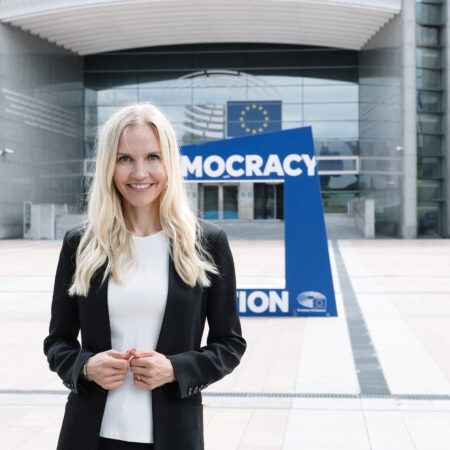
Member of the European Parliament Aura Salla (National Coalition Party, EPP) has been appointed lead negotiator for the EU’s digital omnibus, which will significantly affect the operating conditions of European companies and citizens’ daily lives, including the cookie settings we click through in our browsers. As lead negotiator, Salla will be responsible for forming the European Parliament’s position and negotiating with Member States on easing and clarifying digital legislation.
According to Salla, the EU has hurt itself with excessive and overlapping regulation that has weakened the competitiveness of European companies in the global technology race. At the same time, separate to the omnibus efforts to simplify, she believes the EU must introduce stronger measures such as tariffs, data pricing mechanisms or a digital tax on companies outside the EU, to reduce dependence on non-EU technology firms. In her view, simplifying digital regulation for European companies is both a security and an economic policy issue.
“For years, the EU has focused on regulating its own companies, while China and the United States have invested in growth and technological development. Endless clicking through cookie settings, along with overlapping and unclear rules for businesses, has not made the internet safer for us, it has slowed the growth of European companies. European companies must finally be put first,” Salla says.
The digital simplification package targets, among other things, the Data Act, the General Data Protection Regulation and several pieces of legislation concerning data and cybersecurity. Salla is particularly responsible for the package aimed at regulating data use. The goal is to eliminate overlapping and unnecessary rules, enable access to anonymised data for European companies and make legislation easier to apply in practice.
“We will cut unnecessary regulation, facilitate the use of data for example in developing AI, and reduce obligations related to cookies. This is about smoother functioning both for business and in the everyday digital services used by citizens,” Salla says.
The European Commission aims to reduce the administrative burden arising from digital regulation by up to €5 billion by 2029. Salla emphasises that, in addition to companies, public administrations and citizens will also benefit. She stresses that easing regulation does not mean compromising data protection or security.
“The protection of personal data for individuals and companies will continue to be safeguarded. The problem is not fundamental rights, but the unclear and burdensome application of regulation. Overlapping and contradictory obligations must be removed. At the same time, China and the United States collect European data freely and without charge for their own use. This is unsustainable and must change. European data must primarily serve European companies and Europe’s competitiveness,” Salla concludes.